Introduction
Are you struggling to keep up with the demand for high-quality brazing of large components? In industries like automotive and aerospace, achieving strong, reliable joints is crucial.
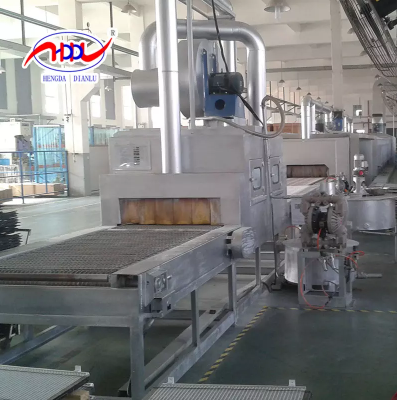
The NB Continuous Air-cooled Island Brazing Furnace is designed to meet these challenges. This furnace offers unique advantages for efficiently brazing larger components, such as air-cooled islands.
In this article, we’ll explore the key benefits of the NB furnace and how it improves both production efficiency and joint quality for large-scale manufacturing.
How the NB Furnace Supports Extra-Long Brazing Lines
| Feature | NB Continuous Air-cooled Island Brazing Furnace | Standard Brazing Furnace |
| Furnace Length | Extra-long to accommodate large components | Standard length, may require multiple cycles for large parts |
| Heating Distribution | Uniform heat distribution across large parts | May experience temperature gradients in large components |
| Capacity | High-capacity, continuous operation | Limited capacity, often requires segmented brazing |
| Ideal for Large Components | Air-cooled islands, heavy equipment | Smaller components or limited in size |
| Energy Efficiency | Optimized for energy savings | Higher energy consumption for longer cycles |
Design Features for Large Components
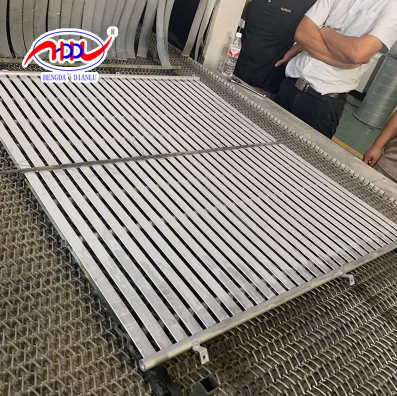
The NB Continuous Air-cooled Island Brazing Furnace stands out due to its extra-long design, which is specifically engineered to accommodate larger components, like air-cooled islands. This design ensures that large components or assemblies, whether monolithic or segmented, can be efficiently brazed in a single cycle. This feature is crucial for manufacturers dealing with heavy-duty components that require extended brazing lengths.
In contrast to standard brazing furnaces, the NB furnace can handle the full assembly or critical parts at once, reducing the need for multiple cycles or segmented brazing. By doing so, it ensures uniform heating across all components, which is essential for maintaining high-quality brazing results and preventing defects such as uneven joint strength.
Ensuring Consistent Heating Across Large Parts
When dealing with large workpieces, ensuring even heat distribution can be a challenge. However, the NB furnace addresses this issue by providing consistent and uniform heating across the entire length of the components. This uniform heat distribution is vital to avoid problems such as temperature gradients, which can lead to deformation, cracking, or weak brazed joints.
The furnace’s extended length allows it to maintain steady heating over large components, ensuring that all areas receive the required temperature for optimal brazing. This results in high-quality brazed joints, which are crucial for products that must endure high mechanical stresses, such as in automotive and industrial applications.
Increasing Production Efficiency for Large-scale Operations
High-volume production demands both speed and precision, and the NB furnace excels in both areas. Thanks to its continuous design, the furnace operates seamlessly, reducing downtime between cycles. The ability to handle large components or multiple workpieces simultaneously increases throughput, which is essential for large-scale manufacturing.
By automating the brazing process, the NB furnace minimizes labor costs and maximizes production efficiency. This continuous brazing capability is ideal for industries that require large quantities of components to be processed rapidly, while still maintaining high quality. Furthermore, it reduces the complexity of the production line, making it easier to meet demanding production schedules.
The Role of Nitrogen Atmosphere in Protecting Brazed Materials
| Benefit | Description |
| Prevents Oxidation | Ensures that the brazed joint is not exposed to oxygen, avoiding oxidation of sensitive metals like aluminum. |
| Maintains Material Integrity | Protects the base materials from unwanted chemical reactions during the brazing process. |
| Ensures High-Quality Joints | Guarantees smooth filler metal flow, resulting in durable, strong brazed joints. |
| Ideal for High-Temperature Metals | Especially crucial for materials that are prone to oxidation at elevated temperatures. |
Preventing Oxidation and Ensuring Quality Joints
Oxidation can significantly weaken brazed joints and compromise their strength. To mitigate this risk, the NB Continuous Air-cooled Island Brazing Furnace operates in a nitrogen atmosphere. This inert environment prevents oxygen and moisture from coming into contact with the brazed components, eliminating the risk of oxidation during the heating process.
The controlled nitrogen atmosphere is especially critical for metals such as aluminum, which are prone to oxidation at high temperatures. By creating a protective barrier, the furnace ensures that the filler metal flows smoothly into the joint, forming strong, durable bonds without being compromised by environmental factors.
Maintaining Material Integrity During Brazing
The use of nitrogen also helps preserve the integrity of the base materials during brazing. Since nitrogen is chemically inert, it prevents unwanted reactions between the filler metal and the base metals. This is essential for ensuring that the physical properties of the components—such as strength, corrosion resistance, and durability—are maintained throughout the brazing process.
For industries such as automotive and aerospace, where components are exposed to extreme conditions, the NB furnace ensures that the materials maintain their full structural integrity. The nitrogen environment allows for precise brazing without degrading the base materials, making it an ideal solution for high-performance applications.
Key Benefits of the NB Continuous Air-cooled Island Brazing Furnace
Boosting Production with High Capacity
The NB Continuous Air-cooled Island Brazing Furnace is built for high-capacity production. Its extended length and continuous operation design make it well-suited for manufacturers that need to process large workpieces, such as air-cooled islands, efficiently. By offering the ability to handle multiple parts in a continuous cycle, the furnace increases throughput and reduces the need for frequent stops between cycles.
This high capacity ensures that manufacturers can meet the demands of large-scale production while still achieving high-quality brazing results. The furnace helps businesses maintain a competitive edge by improving operational efficiency and allowing for faster turnaround times.
Energy Efficiency and Environmental Advantages
Energy efficiency is a major consideration in large-scale manufacturing operations, and the NB furnace is designed to minimize energy consumption while maintaining precise temperature control. This reduces operational costs and makes the brazing process more sustainable.
The furnace’s efficient design also minimizes material waste, as it reduces the amount of filler metal and flux required for each brazing cycle. As a result, manufacturers can lower material costs and reduce their environmental footprint, making the NB furnace an environmentally responsible choice for businesses seeking sustainable production methods.
Enhanced Durability for Heavy Equipment Manufacturing
The NB Continuous Air-cooled Island Brazing Furnace is specifically designed to handle the demands of heavy equipment manufacturing. Its robust construction ensures that it can withstand the stresses of large-scale production, while maintaining the necessary precision for brazing large components.
For manufacturers involved in the production of air-cooled islands and other heavy-duty components, the furnace’s durability and performance are critical. It ensures that each brazed joint meets the necessary strength requirements, while also improving the longevity of the brazed parts, making them suitable for high-stress applications such as automotive and aerospace.
Precision Temperature Control for Reliable Brazing Quality
Maintaining Consistent Heating and Cooling Cycles
Precision in temperature control is essential for ensuring the quality and consistency of brazed joints. The NB furnace features advanced temperature control systems that maintain the furnace temperature within a narrow range. This level of control prevents overheating or underheating, both of which could negatively impact the brazing process.
The precise control of temperature throughout the brazing cycle ensures that each component receives the right amount of heat, promoting uniform joint formation and reducing the likelihood of defects. This consistency is especially crucial for industries that demand high-quality, reliable brazing results.
Ensuring Long-Term Stability of Brazed Joints
The furnace’s ability to regulate temperature helps ensure the long-term stability of the brazed joints. By preventing thermal stresses and promoting consistent joint formation, the NB furnace contributes to the durability and strength of the finished product. This feature is particularly important for industries where the brazed components will be subjected to extreme conditions or mechanical stresses, such as in the automotive, aerospace, and heavy machinery sectors.
Why the NB Furnace is Ideal for Large-Scale Production
Reliability in Continuous, High-Volume Operations
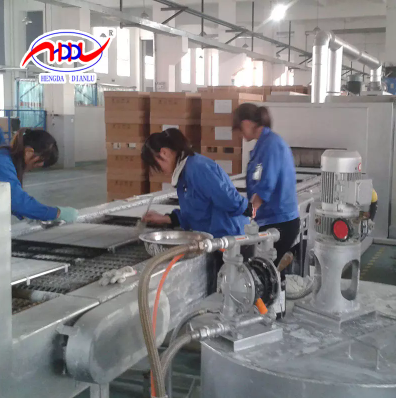
The NB Continuous Air-cooled Island Brazing Furnace is designed to support continuous, high-volume production. Its ability to operate without interruption ensures that manufacturers can meet large-scale production requirements without sacrificing quality. This makes it an ideal solution for businesses that require reliable brazing solutions for large quantities of components.
The continuous operation of the furnace eliminates the need for manual intervention, reducing the chances of human error and allowing manufacturers to focus on other aspects of production. The furnace’s design ensures that it can handle the demands of high-volume production, making it a crucial component in large-scale manufacturing facilities.
Customizable Settings for Tailored Production Needs
Flexibility is another key advantage of the NB furnace. Manufacturers can adjust the settings to accommodate specific production needs, such as adjusting the temperature for different materials or changing the heating profile to suit different component sizes. This versatility allows the furnace to handle a wide range of production requirements, making it suitable for a variety of industries, including automotive, aerospace, and heavy machinery manufacturing.
Cost-Effectiveness and ROI of the NB Furnace
Long-Term Investment Benefits
The NB Continuous Air-cooled Island Brazing Furnace represents a significant investment for manufacturers, but its long-term benefits far outweigh the initial cost. The furnace’s energy efficiency, high throughput, and reduced maintenance costs translate into substantial savings over time. By reducing energy consumption and material waste, manufacturers can see a high return on investment, ensuring that the furnace pays for itself over the course of its lifespan.
Minimizing Maintenance Costs Over Time
Thanks to its durable construction and efficient design, the NB furnace requires less maintenance compared to other brazing systems. This helps lower operational costs over time by reducing the frequency of repairs and the need for spare parts. The furnace’s reliability and long service life make it an excellent investment for businesses that rely on continuous brazing without interruption.
Conclusion
The NB Continuous Air-cooled Island Brazing Furnace is an indispensable tool for large-scale manufacturing, especially for heavy-duty components. Its extended length and precision temperature control ensure consistent, high-quality brazing. Manufacturers who invest in the NB furnace can boost production efficiency, lower energy consumption, and create durable, high-quality brazed joints that meet industry standards. For businesses looking to enhance their manufacturing capabilities, Hengda Furnace Industry Co., Ltd. offers this advanced furnace, which delivers outstanding value in precision and efficiency.
FAQ
Q: What is the NB Continuous Air-cooled Island Brazing Furnace?
A: The NB Continuous Air-cooled Island Brazing Furnace is a high-capacity furnace designed to efficiently braze large components, such as air-cooled islands, with precise temperature control and consistent heating.
Q: How does the NB Continuous Air-cooled Island Brazing Furnace improve production efficiency?
A: The furnace's extended length and continuous operation enable it to handle large volumes of parts simultaneously, reducing downtime and increasing throughput for large-scale operations.
Q: Why is the NB Continuous Air-cooled Island Brazing Furnace ideal for large components?
A: Its extra-long design allows for uniform heating and brazing of large parts, such as air-cooled islands, without the need for multiple cycles, ensuring consistent results.
Q: How does the nitrogen atmosphere in the furnace protect brazed materials?
A: The nitrogen atmosphere prevents oxidation and maintains material integrity by creating an inert environment, ensuring high-quality brazed joints in sensitive materials like aluminum.
Q: What are the advantages of using the NB Continuous Air-cooled Island Brazing Furnace over other furnaces?
A: Compared to standard furnaces, the NB furnace offers higher capacity, energy efficiency, and the ability to braze large components continuously, resulting in lower costs and higher production rates.
Q: What is the ROI of investing in the NB Continuous Air-cooled Island Brazing Furnace?
A: The furnace provides high ROI through energy savings, reduced maintenance costs, and increased production efficiency, helping businesses achieve long-term cost savings.