As global demand for energy-efficient systems and lightweight vehicles continues to rise, industries are turning to more advanced and reliable joining techniques. Among these, brazing has emerged as a critical process due to its ability to create strong, leak-proof, and thermally stable joints between dissimilar or similar metals. At the heart of this process is the brazing furnace, a vital piece of equipment in modern manufacturing environments.
Brazing furnaces offer precise temperature control, clean atmospheres, and the ability to mass-produce complex assemblies with consistent quality. Two industries that heavily depend on brazing furnace technology are the HVAC (Heating, Ventilation, and Air Conditioning) industry and the automotive industry. Both sectors require efficient thermal management, lightweight construction, and high-performance components—needs that brazing furnaces are well-suited to meet.
This article explores the diverse applications of brazing furnaces in the HVAC and automotive sectors, demonstrating why they are indispensable tools in today’s manufacturing landscape.
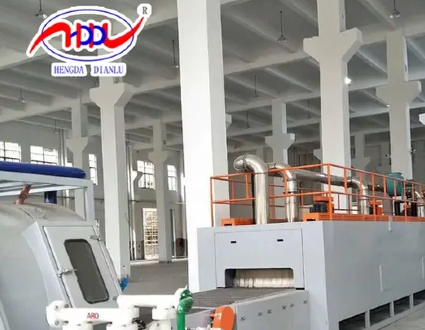
Understanding Brazing Furnace Technology
Before diving into industry-specific applications, it's important to understand what a brazing furnace does. A brazing furnace is a heat-processing machine that joins metal components using a filler metal, which melts at a lower temperature than the base materials. The process does not melt the base metals, which means the mechanical integrity of the parts is preserved.
Depending on the application and materials involved, brazing furnaces may operate under vacuum, controlled atmosphere, or open air conditions. These systems ensure that oxidation is minimized and the resulting joints are clean, strong, and reliable.
Brazing Furnaces in the HVAC Industry
The HVAC industry relies heavily on metal joining techniques to produce systems that manage heat and air flow efficiently. Brazing furnaces are crucial for assembling components such as:
1. Heat Exchangers
Heat exchangers are found in air conditioners, furnaces, and refrigeration systems. They require precise and leak-free joints between tubes, fins, and headers, often made from copper or aluminum. Brazing furnaces allow for uniform heating and controlled atmosphere brazing, which results in high-quality joints with excellent thermal conductivity and long service life.
2. Evaporator and Condenser Coils
These coils, commonly made from copper and aluminum alloys, must endure fluctuating temperatures and pressure changes. Any leaks or weak joints can lead to significant efficiency losses or system failure. Using brazing furnaces ensures consistent production and strong, hermetically sealed joints, making these components durable and reliable.
3. Manifolds and Connectors
In HVAC systems, various pipes and tubes are joined using manifolds and connectors, which must be precisely aligned and joined with no risk of blockage or leakage. Brazing furnaces provide the precise temperature control and clean atmosphere needed to produce dependable connections, even on small, intricate assemblies.
4. Economical Mass Production
HVAC products are often manufactured in large volumes. Brazing furnaces—particularly continuous or mesh-belt type furnaces—support high-throughput manufacturing, enabling manufacturers to produce hundreds or thousands of components daily while maintaining consistent quality. This capability is especially important for OEM suppliers who need both speed and reliability.
5. Environmentally Friendly and Energy Efficient
The use of nitrogen or hydrogen atmospheres in brazing furnaces reduces oxidation, which eliminates the need for post-braze cleaning or flux, creating environmentally friendly and cost-effective production lines.
Brazing Furnaces in the Automotive Industry
Automotive manufacturing is driven by the need for lighter, stronger, and more efficient vehicles. From fuel efficiency to thermal management, brazing plays a critical role in assembling key components in modern cars. Brazing furnaces are extensively used for:
1. Radiators and Cooling Systems
Automotive radiators require the joining of multiple thin tubes and fins, typically made of aluminum. These components must be assembled with high thermal conductivity and corrosion resistance, and brazing is the ideal solution. Brazing furnaces, particularly CAB (Controlled Atmosphere Brazing) furnaces, allow for the mass production of radiators with clean, flux-free joints that don’t require further cleaning.
2. Exhaust Systems and Heat Shields
Many parts of the exhaust system, including catalytic converters, manifolds, and mufflers, are brazed using stainless steel components. Brazing furnaces provide the ability to create strong joints at high temperatures that can withstand the extreme conditions within a vehicle’s exhaust path.
3. Fuel Lines and Air Conditioning Systems
Automotive fuel and refrigerant lines often combine different metals like aluminum and stainless steel, which can be challenging to join using traditional welding methods. Brazing furnaces provide a non-destructive joining method that ensures leak-free connections without altering the structural integrity of the tubing.
4. Transmission Components
Certain transmission elements—such as torque converters and oil coolers—are assembled using brazing. The precise control offered by a brazing furnace helps maintain dimensional stability and prevent warping in delicate parts.
5. E-Mobility and Electric Vehicles (EVs)
As the world moves toward electric mobility, brazing furnaces are being increasingly used to manufacture battery cooling plates, inverter housings, and thermal management modules for EVs. Lightweight, thermally efficient, and compact assemblies are crucial for EV performance and range. Brazing offers the high precision and reliability needed in this demanding segment.
6. Lightweight Construction with Aluminum
Weight reduction is a key strategy in the automotive industry to improve fuel economy and reduce emissions. Brazing furnaces enable high-strength aluminum brazing, which helps replace heavier steel parts without compromising safety or durability. Vacuum brazing and CAB processes make this transformation possible at scale.
Why Brazing Furnace Technology Is Indispensable
The HVAC and automotive industries both demand high standards for quality, efficiency, and scalability. Brazing furnaces offer all three. With features such as:
Precise and consistent temperature control
Controlled atmosphere options to avoid oxidation
High throughput for mass production
Compatibility with a wide range of metals and part geometries
These furnaces are a cornerstone of modern manufacturing.
Moreover, as global regulations increase pressure on industries to reduce emissions and improve efficiency, brazing offers a cleaner, more sustainable solution compared to welding or soldering.
Invest in Proven Technology for Industrial Brazing
For companies seeking to upgrade their brazing capabilities, working with an experienced manufacturer is crucial. Whether you are producing HVAC coils or automotive heat exchangers, investing in a high-quality brazing furnace ensures long-term productivity and product quality.
At www.hengdabrazingfurnace.com, you’ll find a wide range of atmosphere brazing, vacuum brazing, and continuous conveyor-type brazing furnaces tailored for industrial applications. HENGDA’s engineering expertise ensures you get customized solutions with energy efficiency, process automation, and industry-compliant designs.
Their team offers full lifecycle support, from technical consultation to equipment installation and maintenance, ensuring that your brazing operations run smoothly and profitably.
Conclusion
In both the HVAC and automotive sectors, brazing furnaces play a central role in assembling reliable, high-performance, and energy-efficient components. From heat exchangers and radiators to battery cooling systems and transmission parts, brazing provides the strength, precision, and repeatability that modern industries demand.
As manufacturing evolves, the need for clean, scalable, and automation-ready solutions will only grow. Brazing furnace technology is well-positioned to meet these challenges, helping manufacturers deliver better products faster and more sustainably.
If you are considering integrating or upgrading brazing systems in your production line, visit www.hengdabrazingfurnace.com to explore innovative, industry-proven solutions built for your specific application.