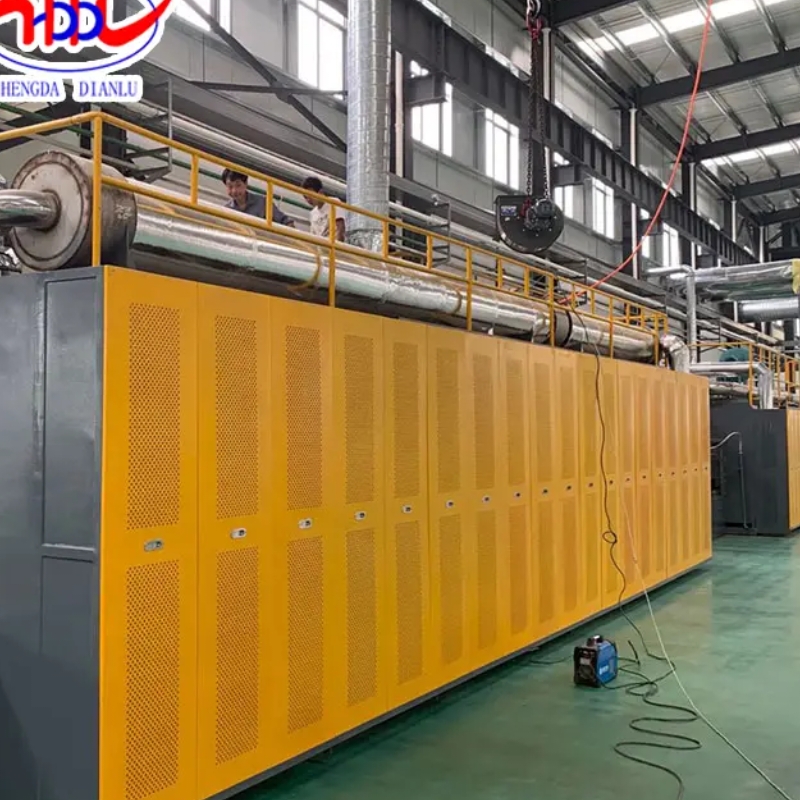
In the industrial manufacturing sector, brazing furnaces are indispensable for joining materials with high precision and durability. However, traditional brazing equipment, predominantly relying on electricity or expensive fuels, has been grappling with significant operational challenges. High energy consumption has led to soaring costs, making it difficult for many enterprises, especially small - and medium - sized ones, to maintain healthy profit margins. Moreover, the fluctuating prices of energy sources pose a considerable risk to the stability of production costs. For instance, when electricity prices spike during peak demand seasons or due to supply - side issues, manufacturers find themselves in a tight spot, either absorbing the increased costs or passing them on to consumers, potentially losing market competitiveness.
This energy - related conundrum has left industrial manufacturers constantly searching for solutions that can not only reduce operational expenses but also ensure stable production. Against this backdrop, understanding the unique advantages of regions with abundant and low - cost natural gas resources becomes crucial, as does the role of innovative equipment like the NB Continuous Gas Brazing Furnace in leveraging these advantages.
The Distinctive Advantages of Low - Cost Gas Source Regions
Characteristics of Resource Distribution
Natural gas resources are unevenly distributed across the globe. In the United States, the shale gas revolution has transformed regions like Pennsylvania and Texas into major gas - producing areas, with vast reserves that have made natural gas readily available. In China, provinces such as Xinjiang and Sichuan are rich in natural gas. Xinjiang benefits from its large - scale gas fields, while Sichuan has a long - established natural gas industry supported by its extensive gas - bearing formations. These regions' geographical advantages and geological structures have enabled the accumulation of significant natural gas reserves.
The Formation Mechanism of Low Prices
The low cost of natural gas in these regions can be attributed to several factors. Firstly, the large - scale extraction in resource - abundant areas reduces the unit extraction cost. With advanced extraction technologies and economies of scale, companies can produce natural gas at a lower price per unit. Secondly, well - developed pipeline transportation networks play a vital role. For example, in the United States, a vast pipeline network connects gas - producing regions to consumption centers, minimizing transportation costs. In China, the West - East Gas Pipeline Project has efficiently transported gas from resource - rich western regions to the energy - hungry eastern regions, reducing the overall cost of gas delivery.
Policy Dividend Support
Local governments in low - cost gas source regions often introduce preferential policies to encourage the use of natural gas. These policies may include subsidies for natural gas consumption, tax breaks for enterprises that use natural gas as an energy source, and incentives for investment in gas - related industries. Such policy support not only reduces the cost of natural gas for local enterprises but also promotes the development of related industries, creating a more favorable business environment.
The Perfect Match: NB Brazing Furnace and Low - Cost Gas Sources
Efficient Energy Conversion
The NB Continuous Gas Brazing Furnace is equipped with an advanced natural gas combustion system. Its innovative design ensures a high - efficiency combustion process, with a heat conversion rate far exceeding the industry average. The furnace can fully utilize the energy in natural gas, minimizing waste. Additionally, the intelligent temperature control system plays a crucial role. It can precisely adjust the gas consumption according to the actual production needs. For example, when the brazing process requires a lower temperature, the system automatically reduces the gas supply, avoiding unnecessary energy consumption.
Significant Cost Reduction
In terms of fuel costs, the NB Brazing Furnace offers remarkable savings compared to equipment using other energy sources. A detailed cost - comparison analysis shows that over a long - term operation, the expense of using natural gas in the NB Furnace can be significantly lower. Take an average - sized manufacturing plant as an example. If it operates a traditional electric - heated brazing furnace, the annual electricity bill may reach hundreds of thousands of dollars. In contrast, by switching to the NB Continuous Gas Brazing Furnace, the annual gas cost could be reduced by 30% - 50% in low - cost gas source regions.
Moreover, the NB Furnace's overall operational cost is also low. Its simple structure and high - quality components result in reduced maintenance needs. The frequency of component replacement is much lower than that of traditional furnaces, saving both time and money on maintenance. The long service life of the equipment further enhances its cost - effectiveness, providing manufacturers with a more favorable return on investment over the equipment's entire life cycle.
Enhanced Production Efficiency
The NB Brazing Furnace's rapid heating feature is a game - changer for production. It can quickly reach the required brazing temperature, significantly shortening the production cycle. For instance, in a production line that used to take 2 hours to complete a brazing process with a traditional furnace, the NB Furnace can finish the same task in just 1.5 hours. This increase in efficiency means that manufacturers can produce more products within the same time frame, effectively boosting their output.
In addition, the stable temperature control of the NB Furnace ensures consistent product quality. The precise temperature maintenance during the brazing process reduces the occurrence of defective products. With fewer次品, manufacturers can save on the costs associated with rework and waste, further improving their overall production efficiency and profitability.
Application Scenarios Across Multiple Industries
Automotive Parts Manufacturing
In low - cost gas source regions, automotive parts manufacturers have reaped significant benefits from the NB Continuous Gas Brazing Furnace. When producing engine components, such as cylinder heads and exhaust manifolds, the furnace's energy - saving and high - efficiency features have enabled companies to reduce production costs while maintaining high - quality standards. The consistent brazing quality ensures the reliability and performance of automotive parts, enhancing the competitiveness of local automotive part suppliers in the global market.
Hardware Products Processing
For small and medium - sized hardware enterprises in these regions, the NB Brazing Furnace has been a key to improving market competitiveness. By taking advantage of the low - cost natural gas and the furnace's cost - effective operation, these companies can produce hardware products at a lower price without sacrificing quality. Whether it's metal fasteners, tools, or decorative hardware, the NB Furnace has helped local enterprises expand their market share by offering more affordable products to customers.
New Energy Equipment Production
In the production of new energy equipment, such as photovoltaic brackets and energy storage device components, the NB Brazing Furnace has demonstrated its dual advantages of environmental friendliness and cost - effectiveness. Natural gas combustion produces fewer pollutants compared to some traditional energy sources, which is in line with the green requirements of the new energy industry. At the same time, the cost savings achieved through the use of low - cost natural gas and the efficient operation of the NB Furnace have made new energy equipment manufacturers more competitive in terms of price, promoting the development of the new energy industry in low - cost gas source regions.
Industry Transformation and Future Trends
Driving the Development of Manufacturing in Low - Cost Gas Source Regions
The NB Continuous Gas Brazing Furnace has played a significant role in promoting the upgrading of local manufacturing industries in regions with abundant natural gas resources. By reducing production costs and improving production efficiency, it has attracted more investment to these areas. New manufacturing enterprises are established, and existing ones expand their production scale, forming a more complete industrial cluster. This not only boosts the local economy but also creates more job opportunities, contributing to regional development.
Pioneering a New Direction in Green Production
Natural gas is a relatively clean - burning energy source. The wide application of the NB Brazing Furnace in low - cost gas source regions has a positive impact on local environmental protection. With reduced emissions of pollutants such as sulfur dioxide and particulate matter, the air quality in these regions has improved. This aligns with the global trend of sustainable development and sets an example for other industries to follow, promoting the overall green transformation of the manufacturing sector.
Demonstrating Technological Leadership
Hengda Furnace Industry Co., Ltd.'s innovative technologies embodied in the NB Brazing Furnace have set a benchmark for the industry. The furnace's advanced design and high - performance features have inspired other equipment manufacturers to invest in research and development, driving the overall technological progress of the brazing furnace industry. As more enterprises adopt similar advanced technologies, the industry will move towards a more efficient, cost - effective, and environmentally friendly future.
Conclusion
In conclusion, the NB Continuous Gas Brazing Furnace has proven to be an ideal solution for regions with abundant and low - cost natural gas resources. By capitalizing on the unique advantages of these regions, the furnace offers significant benefits in terms of energy efficiency, cost reduction, and production enhancement across various industries. It not only helps individual enterprises improve their competitiveness but also drives the overall development and transformation of the manufacturing industry in low - cost gas source regions. As the world continues to seek more sustainable and cost - effective industrial solutions, the NB Brazing Furnace is well - positioned to play an even more important role in the future. For more information about this revolutionary product and how it can benefit your business, visit www.hengdabrazingfurnace.com.