1. The Importance of Maintenance and Optimization
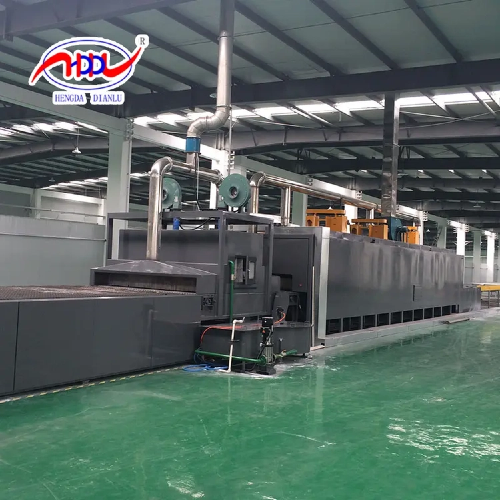
The NB Continuous Cellular Board Brazing Furnace is a vital asset in modern aluminum brazing operations. Its role extends beyond simple heating; it ensures precision, consistency, and efficiency, enabling manufacturers to meet stringent quality standards. In sectors such as automotive, EV battery cooling plates, HVAC, and industrial aluminum components, production demands are continuously increasing. Any interruption or inefficiency in the brazing process can directly affect throughput, product quality, and operational costs.
While the NB furnace provides superior performance compared to traditional batch or retort furnaces, its advanced systems require structured maintenance and optimization. Neglecting these practices can lead to uneven heating, increased energy consumption, operational downtime, and compromised brazing quality. Therefore, understanding the furnace’s components, implementing daily to quarterly maintenance routines, and adopting performance optimization strategies are essential steps for manufacturers aiming to maximize their investment.
In addition to reducing potential defects, proper maintenance and optimization enhance energy efficiency, improve safety, and extend the overall lifespan of the furnace. Manufacturers who prioritize these practices can achieve consistent high-quality output, reduce waste, and maintain a competitive edge in the rapidly evolving industrial landscape.
2. Understanding the Key Components of the NB Continuous Cellular Board Brazing Furnace
Before discussing maintenance and optimization, it is critical to understand the primary components that define the NB Continuous Cellular Board Brazing Furnace’s efficiency and reliability.
2.1 Continuous Conveyor System
The continuous conveyor forms the backbone of the furnace’s operation. It ensures smooth and uninterrupted movement of aluminum components through multiple heating zones. Proper functioning of the conveyor is vital for maintaining steady production rates, controlling residence time, and preventing mechanical stress on the aluminum parts.
The system’s precision allows for adjustable speeds, ensuring that various part sizes and thicknesses are heated uniformly without overexposure or underheating. Conveyor alignment and consistent lubrication are essential to avoid uneven wear, belt slippage, or unplanned stoppages.
2.2 Cellular Board Heating Zones
Cellular boards are designed to transfer heat efficiently to every component, providing uniform temperature distribution. This structure prevents hotspots, cold zones, and thermal stress, which are common causes of brazing defects in traditional furnaces.
The modular design of cellular boards allows targeted maintenance; individual boards can be cleaned, inspected, and replaced without shutting down the entire furnace. Regular inspection ensures consistent heat transfer and preserves the integrity of the brazed joints.
2.3 Multi-Zone Temperature Control
Dividing the furnace into multiple independent heating zones allows precise temperature management across the entire conveyor. Each zone is equipped with high-precision thermocouples and PID controllers. By fine-tuning temperatures according to aluminum alloy types, thickness, and geometry, manufacturers can achieve defect-free brazed joints consistently.
Accurate temperature control also minimizes energy waste. Zones that require less heat can operate at lower setpoints, while more challenging areas receive sufficient energy to achieve proper brazing without overheating surrounding components.
2.4 Protective Atmosphere System
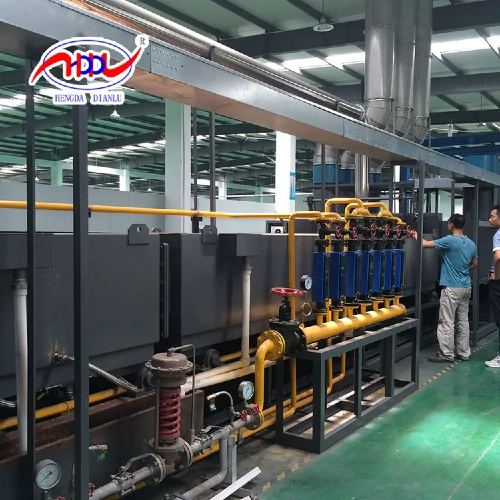
The protective atmosphere, typically composed of nitrogen or hydrogen, plays a crucial role in preventing oxidation and surface degradation during brazing. Maintaining the correct gas flow, pressure, and purity levels is essential for achieving high-quality, defect-free joints.
Monitoring the atmosphere composition ensures that oxygen levels remain minimal, reducing the risk of surface defects and corrosion. Proper sealing and routine inspection of gas supply lines are vital to maintain a stable environment.
2.5 Automation and Monitoring Systems
Automation and real-time monitoring are central to the furnace’s performance. PLC-based controls regulate conveyor speed, heating zones, and atmosphere composition. Integrated sensors provide continuous feedback, enabling operators to make adjustments instantly.
Automation not only improves consistency but also reduces human error, enhances operational safety, and allows predictive maintenance, which helps anticipate potential failures before they impact production.
2.6 Safety and Auxiliary Components
The NB Continuous Furnace incorporates multiple safety and auxiliary systems, including emergency stops, interlocks, alarms, and backup systems. Regular inspection and testing of these components prevent accidents, protect operators, and maintain uninterrupted production.
3. Routine Maintenance Practices
Maintaining the NB Continuous Cellular Board Brazing Furnace ensures consistent performance and reduces the risk of costly downtime. Maintenance should be performed on a daily, weekly, and monthly/quarterly basis, addressing both operational efficiency and long-term reliability.
3.1 Daily Maintenance
Daily tasks focus on preventing minor issues from escalating:
Conveyor Checks: Verify alignment, tension, and smooth operation. Lubricate bearings and moving parts to prevent wear.
Heating Elements Inspection: Check thermocouples and heating elements for damage or drift in readings.
Protective Atmosphere Verification: Inspect gas supply, connections, and pressure levels to ensure proper operation.
3.2 Weekly Maintenance
Weekly inspections help maintain efficiency and product quality:
Cleaning: Remove debris, dust, or aluminum residue from cellular boards and heat transfer surfaces.
Automation and Sensors: Inspect electrical connections, sensors, and control panels for stability and accuracy.
Gas Flow Assessment: Check supply lines for leaks or blockages and confirm flow rates meet operational standards.
3.3 Monthly and Quarterly Maintenance
Comprehensive inspections extend furnace longevity and prevent major failures:
Furnace Structure Inspection: Evaluate insulation, mechanical components, and framework for signs of wear or damage.
Temperature Calibration: Calibrate thermocouples, PID controllers, and monitoring systems for precision.
Software Updates: Apply updates to PLCs and monitoring software to improve automation and data accuracy.
Auxiliary Systems Assessment: Test safety interlocks, emergency stops, alarms, and backup systems to ensure functionality.
4. Optimization Strategies for Performance Enhancement
Optimization complements maintenance by improving production efficiency, energy usage, and brazing quality.
4.1 Temperature Profile Optimization
Multi-Zone Adjustments: Tailor temperature settings in each zone for specific aluminum alloys and part designs.
Conveyor Speed Tuning: Adjust speeds to balance heating time and throughput, ensuring uniform brazing without overexposure.
4.2 Atmosphere Management
Maintain protective gas flow to prevent oxidation.
Regularly calibrate oxygen sensors to detect leaks or deviations.
Ensure proper sealing at entrance and exit zones to maintain atmosphere integrity.
4.3 Energy Efficiency Optimization
Inspect and maintain insulation to minimize heat loss.
Reduce energy waste in entrance and exit zones through proper airflow management.
Schedule production to avoid idle periods and optimize furnace usage.
4.4 Automation and Monitoring Enhancements
Utilize real-time data for predictive maintenance and early issue detection.
Implement alerts and automated adjustments for consistent quality.
Continuously monitor key parameters to maintain efficient operation.
5. Troubleshooting Common Issues
Even with regular maintenance, operational challenges can arise. Understanding common issues and addressing them promptly ensures uninterrupted production.
5.1 Uneven Heating or Hotspots
Clean and calibrate cellular boards and thermocouples.
Adjust zone temperatures and conveyor speed to achieve uniform heating.
5.2 Conveyor Misalignment or Stoppages
Inspect rollers, belts, and drive systems regularly.
Lubricate moving parts and replace worn components immediately.
5.3 Gas Flow or Atmosphere Inconsistencies
Verify gas supply pressures and flow rates.
Inspect pipelines and fittings for leaks and maintain oxygen sensor calibration.
5.4 Sensor or Automation Failures
Test sensors and controllers for accuracy.
Update software and firmware to prevent unexpected malfunctions.
6. Benefits of Proper Maintenance and Optimization
Proper care of the NB Continuous Cellular Board Brazing Furnace yields measurable benefits:
Benefit | Description |
Extended Equipment Lifespan | Reduces wear, prevents early failure, and preserves operational integrity. |
Higher Throughput | Optimized conveyor speed and temperature profiles allow faster cycles. |
Improved Brazing Quality | Consistent heating and protective atmosphere ensure defect-free joints. |
Reduced Scrap and Rework | Early detection of issues lowers defective output. |
Energy Savings | Efficient heat management reduces energy consumption. |
Enhanced Safety | Functional interlocks, automation, and monitoring reduce operational risks. |
7. Conclusion
Maintaining and optimizing the NB Continuous Cellular Board Brazing Furnace is essential for achieving peak operational efficiency in modern aluminum brazing. Proper care ensures consistent, high-quality brazed joints, enabling manufacturers to meet stringent production standards while reducing defects and scrap rates. Optimized furnace performance also delivers higher throughput, allowing faster production cycles without compromising quality.
In addition, effective maintenance and fine-tuning of the furnace contribute to reduced energy consumption and lower operational costs, making production more sustainable and cost-efficient. By keeping all components—including the continuous conveyor, cellular board heating zones, temperature controls, and protective atmosphere systems—in optimal condition, manufacturers can extend the lifespan of the furnace and maintain reliable performance over time.
For companies aiming to enhance production efficiency, maintain competitive advantages, and achieve consistently superior aluminum brazing results, understanding and leveraging the full capabilities of the NB Continuous Cellular Board Brazing Furnace is crucial. To explore professional guidance, technical support, or tailored solutions, consider contacting the experts at Hengda Furnace Industry Co., Ltd. Their experience ensures that manufacturers can optimize operations, maintain high-quality output, and maximize the value of their furnace investment.
8. FAQs
Q1: How often should I perform maintenance on the NB Continuous Furnace?
A1: Daily checks, weekly inspections, and monthly or quarterly comprehensive maintenance are recommended for optimal performance.
Q2: What are the most critical components to monitor for optimal performance?
A2: Conveyor system, cellular boards, temperature zones, protective atmosphere system, and sensors are key components.
Q3: How can I optimize the temperature profile for different aluminum alloys?
A3: Adjust multi-zone temperatures and conveyor speed according to material thickness, alloy type, and component design.
Q4: What steps ensure the protective atmosphere remains effective?
A4: Maintain proper gas flow, monitor oxygen levels, inspect supply lines, and calibrate sensors regularly.
Q5: How does regular maintenance impact energy efficiency and production costs?
A5: Proper maintenance minimizes energy waste, reduces scrap, and lowers labor requirements, resulting in cost savings.
Q6: Can automation and monitoring systems help reduce manual maintenance needs?
A6: Yes, real-time data and predictive alerts allow timely adjustments, minimizing downtime and manual interventions.