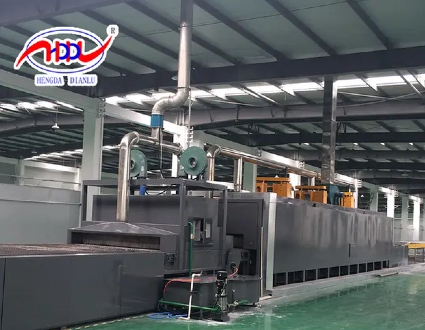
In today’s advanced manufacturing environment, precision and reliability are paramount. Industries ranging from aerospace and automotive to electronics and energy demand joining technologies that ensure strong, clean, and reliable connections between metal components. One of the most effective solutions to achieve this is brazing, and at the heart of this process lies a critical piece of equipment: the brazing furnace.
A brazing furnace plays an essential role in ensuring that metal parts are joined under tightly controlled conditions. Unlike welding, which melts the base materials, brazing uses a filler metal with a lower melting point, allowing for a secure bond without compromising the integrity of the components. This makes it especially valuable for precision metal joining, where dimensional accuracy, joint strength, and cleanliness are critical.
In this article, we explore the vital role brazing furnaces play in precision metal joining applications, highlighting their technical advantages, industry-specific uses, and why they are increasingly relied upon in high-performance manufacturing.
Understanding Precision Metal Joining
Precision metal joining refers to the process of permanently combining two or more metal parts with high accuracy, repeatability, and minimal distortion. This is especially important when components must:
Withstand mechanical loads or thermal cycling
Maintain tight tolerances
Resist corrosion or oxidation
Operate in critical or high-risk environments
Methods such as TIG welding, laser welding, and soldering can be used in specific scenarios, but brazing stands out for its versatility, ability to join dissimilar metals, and clean, flux-free finish—especially when done in a controlled furnace environment.
What Is a Brazing Furnace?
A brazing furnace is a specialized heating system that raises metal assemblies to a temperature above the melting point of the filler metal (typically between 600°C and 1250°C), but below the melting point of the base metals. This process allows the molten filler to flow into the joint by capillary action, creating a strong, sealed bond once cooled.
Furnaces can be designed to operate under various conditions, such as:
Vacuum (vacuum brazing furnaces)
Controlled atmosphere (e.g., nitrogen, hydrogen)
Open air or inert gas protection
The choice of furnace depends on the material being brazed, the complexity of the part, and the quality requirements.
Advantages of Brazing Furnaces for Precision Joining
1. Accurate Temperature Control
In precision joining, temperature uniformity and control are crucial. Overheating can distort parts or degrade material properties, while underheating can cause weak joints. Brazing furnaces provide multi-zone control systems that maintain exact temperature profiles throughout the process. This ensures consistent heating and repeatable results across each cycle.
2. Clean, Oxidation-Free Joints
When brazing is performed in a vacuum or controlled atmosphere furnace, the presence of oxygen is eliminated or minimized, preventing the formation of oxide layers on metal surfaces. This results in cleaner, stronger joints and often eliminates the need for post-braze cleaning processes like pickling or grinding.
3. Joining of Dissimilar Metals
Brazing is especially useful for joining dissimilar metals that cannot be welded due to melting point differences or metallurgical incompatibility. A brazing furnace can reliably join combinations such as:
Stainless steel to copper
Aluminum to steel
Nickel alloys to ceramics or titanium
This makes it ideal for applications in electronics, medical devices, and aerospace systems.
4. Minimal Distortion
Unlike welding, brazing does not involve melting the base metals. As a result, the thermal stress and distortion on components is significantly reduced. This is essential for precision assemblies such as turbine blades, fuel injectors, or microelectronic packages, where exact geometries must be maintained.
5. High-Volume Production
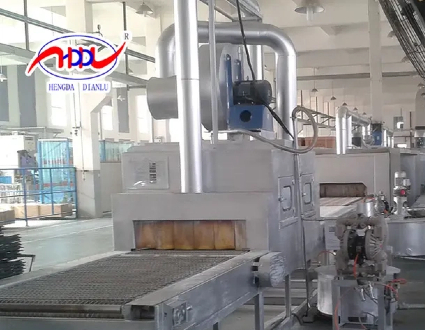
Modern brazing furnaces—especially continuous or mesh belt types—are designed for automated, high-throughput manufacturing. This allows for the precise joining of thousands of components per day, each processed under consistent thermal and atmospheric conditions. It’s ideal for automotive heat exchangers, compressor parts, or HVAC systems.
Industry Applications of Precision Brazing Furnaces
Aerospace and Defense
In aerospace, component performance is mission-critical. Brazing furnaces are used to join:
Jet engine components
Heat exchangers
Turbine blades
Fuel system parts
Vacuum brazing is preferred due to its ability to produce high-integrity joints free of oxides and contaminants. The controlled process ensures long-term performance in high-temperature and high-pressure environments.
Automotive Industry
Automotive manufacturers use brazing furnaces to join:
Aluminum radiators and condensers
EV battery cooling plates
Fuel rails and EGR components
Transmission oil coolers
Controlled atmosphere brazing (CAB) using nitrogen ensures clean joints for aluminum parts without the use of corrosive flux. This leads to lower environmental impact and improved product lifespan.
Electronics and Electrical Engineering
In microelectronics, where component size and precision are critical, brazing furnaces are used to join:
Power semiconductor packages
Sensors and signal processors
Copper heat sinks to substrates
Vacuum brazing eliminates contamination and enables micron-level joint precision, critical for modern devices.
Medical Device Manufacturing
Medical implants, surgical tools, and diagnostic equipment require biocompatible, hermetically sealed joints. Brazing furnaces can join:
Titanium implants
Stainless steel surgical assemblies
Ceramic-to-metal seals
The process ensures repeatability and cleanliness, meeting stringent FDA or CE quality standards.
HVAC and Refrigeration
Heat exchangers, evaporator coils, and manifolds in HVAC systems require leak-proof, corrosion-resistant joints. Brazing furnaces offer:
Uniform heating for tube-to-header joints
Batch or continuous processing
Flux-free, clean results with nitrogen atmosphere
This leads to efficient thermal performance and long service life for HVAC equipment.
Why Brazing Furnaces Are the Preferred Choice
Compared to manual brazing or torch-based methods, brazing furnaces provide a controlled, scalable, and high-quality solution for industrial joining. Key benefits include:
Automation: Fully integrated systems for loading, heating, cooling, and unloading
Repeatability: Each cycle produces identical thermal conditions, ensuring consistent quality
Efficiency: Reduced energy loss and high part throughput
Flexibility: Suitable for various part sizes, metals, and geometries
Cost-effectiveness: Over time, furnaces reduce labor, scrap, and rework costs
Choosing the Right Brazing Furnace for Precision Applications
If your business demands precision metal joining, selecting the right brazing furnace is a strategic decision. Consider factors like:
Maximum operating temperature
Atmosphere control (vacuum, nitrogen, hydrogen)
Heating zone configuration
Loading system (batch, continuous, pusher-type)
Process control automation and software integration
Safety standards and energy efficiency
Working with an experienced furnace manufacturer ensures that the system is tailored to your application needs.
For tailored, high-performance brazing solutions, you can visit www.hengdabrazingfurnace.com, a trusted provider of vacuum brazing furnaces, CAB furnaces, and custom high-temperature systems for precision industries. Their expertise, global service network, and commitment to innovation make them an ideal partner for your long-term brazing operations.
Conclusion
In the world of precision metal joining, the brazing furnace is more than just a heat source—it is a gateway to stronger products, tighter tolerances, and reliable performance. As industries demand more efficiency and higher quality, brazing furnaces offer the control, consistency, and scalability required to meet those expectations.
Whether you’re in aerospace, automotive, medical, or electronics manufacturing, investing in the right brazing furnace can dramatically improve your production quality and operational efficiency.
To explore customized brazing furnace solutions that suit your exact production goals, visit www.hengdabrazingfurnace.com today and discover how modern brazing technology can take your precision joining processes to the next level.